The Safest Investment in India
The Public Provident Fund (PPF) is backed by the sovereign guarantee of the Government of India. It is 100% safe, incredibly tax-efficient, and offers a forced-savings lock-in that prevents you from panic-selling during market crashes.
For FIRE practitioners, it forms a crucial part of the debt allocation (the "Bond Tent") needed to survive early retirement safely.
The PPF Rules and Math
| PPF Rule | Details |
|---|---|
| Annual Limit | Minimum ₹500, Maximum ₹1,50,000 per financial year |
| Tax Status | EEE (Exempt on deposit under 80C, Exempt interest, Exempt maturity) |
| Lock-in Period | 15 Years mandatory (Can be extended in 5-year blocks) |
| Current Interest Rate | 7.1% (Subject to quarterly revision by govt) |
| Partial Withdrawal | Allowed from 7th year (subject to strict conditions) |
The Secret to Maximum PPF Interest
Interest on PPF is calculated on the minimum balance in your account between the 5th and the end of each month.
- The Hack: To maximize your returns, you should invest your entire ₹1.5 Lakh limit in a single lump sum before April 5th every year. This ensures you earn interest on the full amount for all 12 months of that financial year. If you invest monthly via SIP, ensure the deposit hits before the 5th of each month.
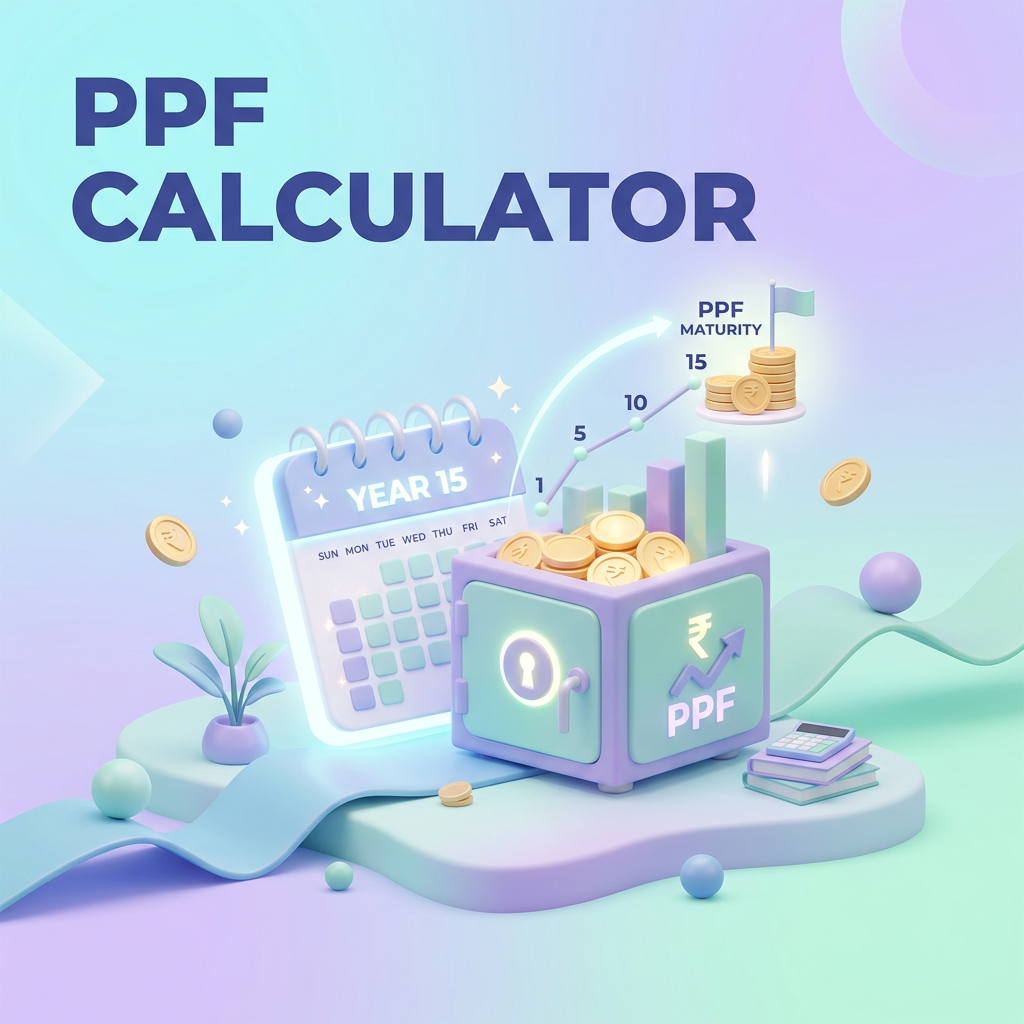
When exactly will your PPF mature?
plannF tracks your exact PPF maturity date and automatically unlocks the tax-free corpus into your liquid net worth in that exact year of your FIRE timeline.
See a Live DemoThe Magic of 15, 20, and 25-Year Compounding
Assume you invest the maximum ₹1,50,000 every year before April 5th, at a constant 7.1% interest rate:
| Term | Total Principal Invested | Total Tax-Free Interest Earned | Final Maturity Value |
|---|---|---|---|
| 15 Years | ₹22.5 Lakhs | ₹18.18 Lakhs | ₹40.68 Lakhs |
| 20 Years (1 ext.) | ₹30.0 Lakhs | ₹36.58 Lakhs | ₹66.58 Lakhs |
| 25 Years (2 ext.) | ₹37.5 Lakhs | ₹65.58 Lakhs | ₹1.03 Crores |
Notice how in the 25-year timeline, the interest earned (₹65 Lakhs) is almost double the principal invested (₹37 Lakhs). This is the power of tax-free compounding.
Integrate PPF into Your FIRE Portfolio
A standalone PPF calculator is nice, but retirement planning doesn't happen in a vacuum. You need to see how that ₹1 Crore tax-free maturity integrates with your equity mutual funds, EPF, and real estate to fund your early retirement.
PPF acts as an excellent "Bond Tent" — a safe, non-volatile asset you can draw from during the first few years of retirement if the stock market crashes, preventing Sequence of Returns Risk.
Build a holistic retirement plan.
Model your PPF alongside your Mutual Funds and EPF. See exactly how long your combined wealth will last after you stop working.
Start Your Free PlanFAQs
1. How is the 15-year maturity period of PPF calculated?
The 15-year lock-in period is calculated from the end of the financial year in which the account was opened, not from the exact date of opening. If you open a PPF account on July 10, 2026, the 15-year period begins on April 1, 2027. It will mature on April 1, 2042.
2. Should I extend my PPF account after 15 years?
Yes, almost always. You can extend it in blocks of 5 years with or without fresh contributions. Extending it with contributions allows you to continue earning 7.1% tax-free interest on a massively compounded base. Because you can make partial withdrawals during the extension period, it effectively becomes a highly liquid, tax-free debt fund.
3. Can I open multiple PPF accounts for myself?
No, an individual can only have one PPF account in their name. However, you can open a separate PPF account in the name of your minor child (as a guardian). Note that the combined maximum contribution across your account and your minor child's account cannot exceed ₹1.5 Lakhs per financial year.
4. Is PPF better than ELSS mutual funds?
They serve different purposes. ELSS is an equity instrument offering higher potential returns (10-12%+) but with market risk and a 12.5% LTCG tax on withdrawal. PPF is a debt instrument offering guaranteed, tax-free returns (7.1%) but with a long 15-year lock-in. A balanced FIRE portfolio requires both: ELSS/Equity for growth, and PPF for stability.
5. How does plannF treat PPF in a retirement simulation?
plannF models PPF as a "semi-liquid locked asset." It calculates the tax-free compounding based on your annual contribution, but it prevents the simulation from withdrawing funds from the PPF balance until the exact year of your maturity date. Once mature, it shifts the corpus to your liquid net worth, accurately simulating your cash flow reality.