The Great Indian Obsession
For generations, the ultimate symbol of wealth in India has been physical property. If you own three apartments and a plot of agricultural land, society considers you wealthy.
But the math of Financial Independence, Retire Early (FIRE) does not care about societal status. It cares about cash flow and liquidity.
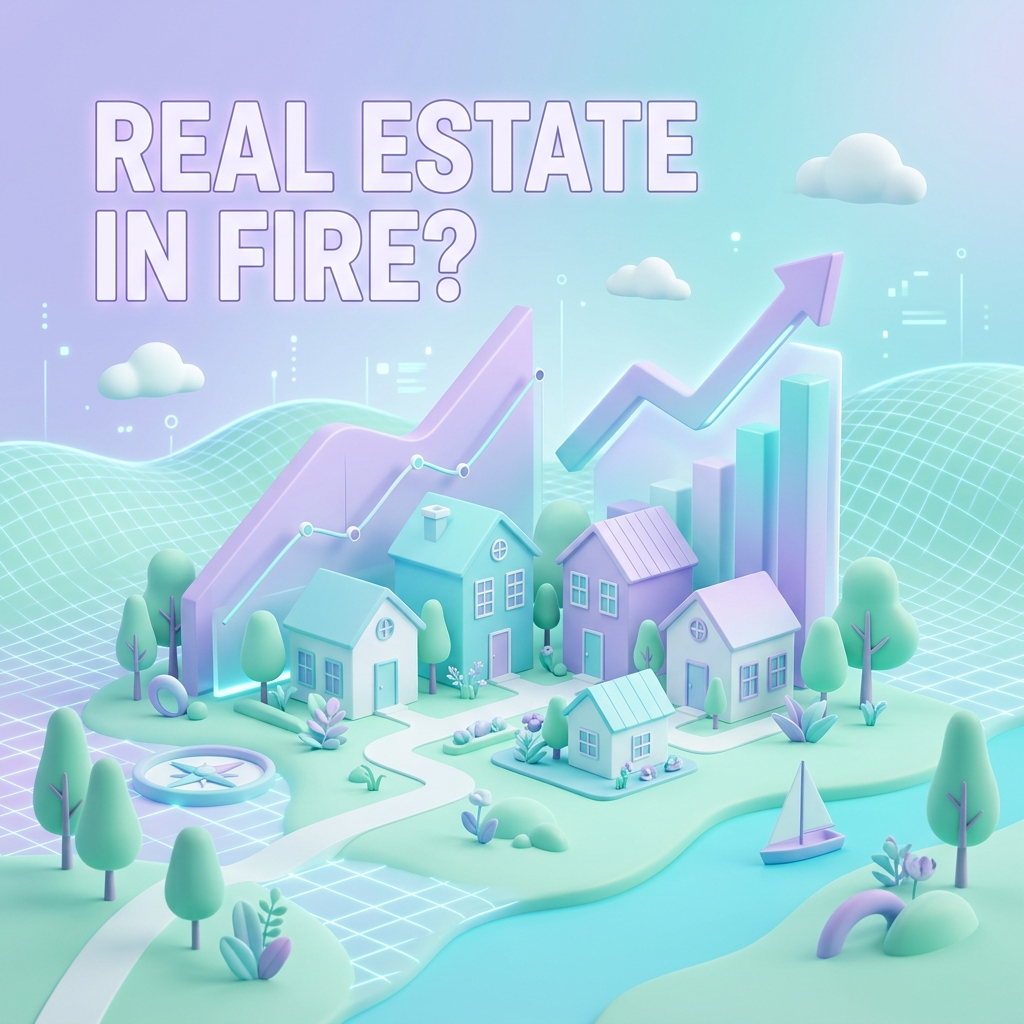
When modern Indian professionals try to calculate their FIRE corpus. Also read how to calculate real estate in your net worth for practical valuation tips. FIRE corpus, they almost always make a catastrophic mistake regarding their real estate holdings. Here is how to correctly value and utilize real estate in an early retirement portfolio.
Rule 1: Exclude Your Primary Residence
If your total net worth is ₹4 Crores, but you live in a ₹3 Crore apartment in Mumbai, your investable, income-generating corpus is only ₹1 Crore.
You cannot buy groceries with drywall.
Your primary residence provides immense psychological safety, and it saves you from paying rent, which drastically lowers your required monthly expenses. However, it does not generate a monthly income.
Unless you plan to execute a "Reverse Mortgage" or sell the house and downsize to a smaller city (Geo-Arbitrage), your primary residence must be assigned a value of Zero when calculating if you have hit your FIRE number.
Separate your Net Worth from your FIRE Corpus.
plannF allows you to track your house as part of your overall Net Worth, but correctly excludes it from your liquid cash flow simulation so you don't overestimate your readiness.
See a Live DemoRule 2: The Rental Yield Problem
What about a second home or a commercial property bought purely for investment? This can be included in your FIRE corpus, but you must look brutally at Indian rental yields.
| Property Type | Typical Gross Yield | Estimated Net Yield (Post Tax & Maintenance) |
|---|---|---|
| Residential (Tier 1 Metros) | 2.5% to 3.5% | 1.5% to 2.0% |
| Residential (Tier 2/3) | 3.5% to 4.5% | 2.5% to 3.0% |
| Commercial (Offices/Shops) | 6.0% to 8.0% | 4.5% to 6.0% |
If you own a ₹1 Crore second apartment in Bangalore, it might generate ₹30,000 a month in rent (₹3.6 Lakhs a year, or 3.6% Gross). However, once you subtract property taxes, maintenance (painting, plumbing), 30% income tax on the rent, and periods of vacancy, your net yield often drops below 2.0%.
The Verdict: If you are relying on residential rent to fund your retirement, you need an absurdly massive corpus. A ₹1 Crore Equity Mutual fund using a 3.5% Safe Withdrawal Rate is infinitely easier to manage than a ₹1 Crore apartment with a tenant who refuses to vacate. Commercial real estate is viable for FIRE, but residential is usually a math failure.
Rule 3: The Danger of Illiquidity
Early retirement requires agility.
If your child suddenly needs ₹20 Lakhs for a medical emergency or a foreign master's degree, you can sell ₹20 Lakhs of a mutual fund from your phone in 45 seconds.
You cannot sell the "bathroom" of your investment property. You have to sell the entire asset. In India, selling property can take 6 to 12 months, involves heavy negotiation, stamp duty losses, and massive 12.5% Long-Term Capital Gains taxes (without indexation benefits) upon the sale.
The Alternative: REITs (Real Estate Investment Trusts)
If you want real estate exposure in your FIRE portfolio without the headaches of physical property, buy REITs (like Embassy, Mindspace, or Brookfield).
REITs are essentially mutual funds for commercial real estate (Grade-A office parks).
- Highly Liquid: They trade on the stock exchange.
- High Yield: They pay mandatory dividends (often yielding 5% to 7%).
- Zero Maintenance: You don't deal with tenants, broken pipes, or property taxes.
Visualize your cash flow accurately.
Model your rental properties in plannF. Add property taxes, maintenance buffers, and rental inflation to see if your real estate is actually helping you retire early.
Start Your Free PlanConclusion: Keep It Liquid
A solid FIRE plan requires 80% to 90% of your assets to be in highly liquid, mark-to-market instruments (Equity, EPF, PPF, Debt Funds, REITs). If you inherited a legacy property, great. But do not lock up your fresh capital in residential bricks if your primary goal is early freedom.
FAQs
1. Can I include an empty plot of land in my FIRE corpus?
No. An empty plot of land generates zero cash flow and actually costs you money in property taxes and security maintenance. It is a highly speculative, illiquid asset. Until you sell the plot and convert the cash into income-generating mutual funds or FDs, it cannot fund your early retirement.
2. How did the removal of indexation affect real estate FIRE planning?
In 2024, the government removed indexation benefits on real estate and set a flat 12.5% LTCG tax. This severely reduced the post-tax returns of holding physical property for long periods, making liquid Equity Mutual Funds (which also have a 12.5% LTCG but far higher growth) mathematically superior for long-term compounding.
3. Should I pay off my home loan before retiring early?
Yes, absolutely. Entering early retirement with debt is highly dangerous because a home loan EMI is a fixed, massive expense. If the stock market crashes, you are forced to sell equities at a loss just to pay your bank. Clearing your mortgage reduces your monthly expenses and your Sequence of Returns Risk.
4. Are REIT dividends tax-free?
No. The taxation of REIT distributions in India is complex. It is split into three parts: Interest, Dividend, and Repayment of Capital. Depending on the specific REIT's tax structure, parts of the payout may be taxed at your slab rate, while the repayment of capital is generally tax-free (but reduces your acquisition cost).
5. How does plannF differentiate between liquid and illiquid assets?
plannF strictly categorizes assets. It tracks your Primary Residence to calculate your total Net Worth, but completely excludes it from the "Liquid FIRE Corpus" calculation that determines if you can safely retire. It also allows you to model rental income with specific yield and tax inputs.