[!NOTE] 2026 Update: All calculations and strategies in this guide have been updated to reflect the removal of indexation benefits and the new 12.5% LTCG tax slab introduced in the latest budget.
The Secret to Long-Term Wealth
If you spend enough time on finance Twitter, you'll see endless debates about which Small Cap fund is best or whether HDFC Bank is undervalued. But decades of academic research prove a boring truth: Over 90% of your long-term returns are determined by your Asset Allocation, not by individual stock picking. Index funds vs active funds is the second most important decision after asset allocation.
If your portfolio is 100% Fixed Deposits, you will lose to inflation. If your portfolio is 100% Small Cap Equity, you will panic-sell during the next recession.
What is Asset Allocation?
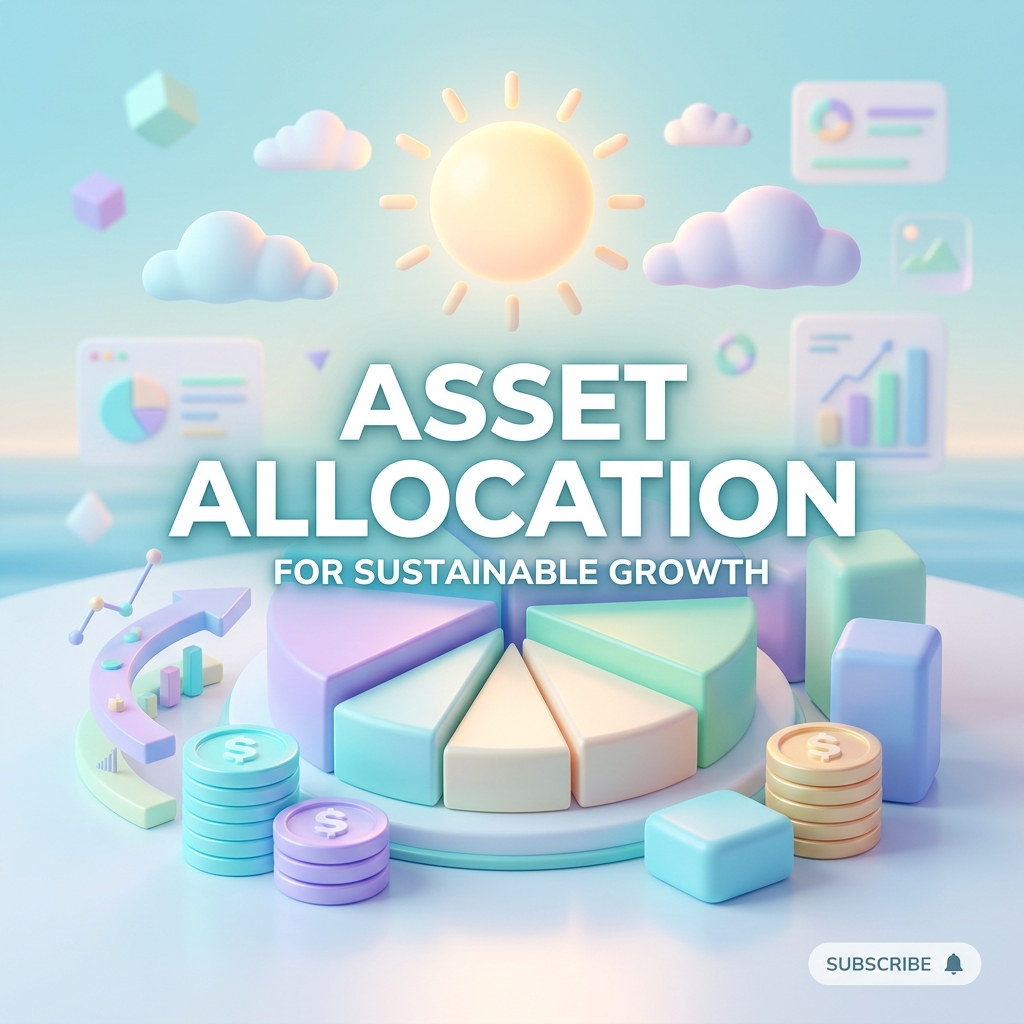
Asset Allocation is the strategy of dividing your investment portfolio across different asset categories (like equity, debt, real estate, and gold) to balance risk and reward according to your timeline and risk tolerance.
The Four Core Asset Classes in India
1. Equity (The Growth Engine)
Equities (Mutual Funds and Stocks) are the only asset class in India that consistently beats inflation and taxes over a 10+ year horizon.
- Expected Return: 11% - 13% (Long Term)
- Role: Wealth creation.
- Vehicles: Nifty 50 Index Funds, Flexi-Cap Funds, Direct Stocks.
2. Debt (The Shock Absorber)
Debt provides stability when equities crash. In India, we are blessed with highly structured, tax-free debt instruments.
- Expected Return: 7% - 8.5%
- Role: Capital preservation and liquidity.
- Vehicles: EPF (Employees' Provident Fund), PPF, Arbitrage Funds, Liquid Mutual Funds, FDs.
3. Gold (The Hedge)
Indians love physical gold, but for an investment portfolio, physical gold is inefficient due to making charges and storage costs.
- Expected Return: Matches inflation (approx 6-8%)
- Role: A hedge against currency depreciation and extreme market panic.
- Vehicles: Sovereign Gold Bonds (SGBs) which pay an extra 2.5% interest, or Gold ETFs. Limit exposure to 5-10% of your portfolio.
4. Real Estate (The Heavyweight)
Commercial and residential real estate can provide yield, but they suffer from extreme illiquidity, massive ticket sizes, and terrible rental yields (often 2-3% in Indian metros).
- Expected Return: Highly localized.
- Vehicles: Direct property (illiquid) or REITs (Real Estate Investment Trusts - liquid).
Strategic vs. Tactical Allocation
How much should you put in each?
The classic rule of thumb is 100 - Your Age = Equity Percentage. If you are 30, you should have 70% in Equity and 30% in Debt.
However, for FIRE (Financial Independence, Retire Early) practitioners, this is often modified to 120 - Your Age because early retirees need a massive growth engine to sustain a 40-year withdrawal period.
A standard Indian FIRE Portfolio (Age 35):
- 65% Equity Mutual Funds (Broad Index/Flexi Cap)
- 25% Debt (Maximized EPF/PPF + Arbitrage Funds for liquidity)
- 5% Sovereign Gold Bonds
- 5% Cash (Emergency Fund)
Rebalancing: Buy Low, Sell High Automatically
Asset allocation naturally drifts over time. If the stock market rallies 30% in a year, your 65% equity allocation might swell to 80%. Your portfolio is now significantly riskier than you intended.
Rebalancing is the act of selling the outperforming asset (Equity) and buying the underperforming asset (Debt) to return to your target 65/35 ratio. It mathematically forces you to "sell high and buy low." Do this once a year, preferably in March to align with Tax Harvesting limits.
FAQs
Should I invest in Real Estate for passive income? Indian residential real estate yields are among the lowest in the world (2-3%). After property taxes and maintenance, you are heavily reliant on capital appreciation. For liquid, hassle-free passive income, equity dividends and SWPs (Systematic Withdrawal Plans) are vastly superior.
Are Debt Mutual Funds useless now due to new tax rules? They are no longer tax-efficient for the long term because they lost indexation benefits. Use Arbitrage Funds (which are taxed as equity) for short-term parking, and EPF/PPF for long-term debt.
Track Your Allocation
A messy spreadsheet won't notify you when your allocation drifts. Use our Net Worth Tracker to see your exact Equity vs Debt split across all your accounts in real-time.
FAQs
1. How often should I rebalance my portfolio?
Ideally, review your asset allocation once a year. Doing it more frequently (like quarterly) can lead to excessive short-term capital gains tax and transaction costs in India.
2. Can I use real estate as my primary debt allocation?
No. Real estate is highly illiquid and cannot act as a shock absorber during a market crash. Debt allocation must be liquid (like EPF, PPF, or Arbitrage funds) so you can access cash immediately.
3. Should I change my asset allocation as I get closer to retirement?
Yes. The standard approach is a "glide path," where you slowly reduce equity exposure and increase debt as you approach retirement to minimize sequence of returns risk.
4. Are international equities necessary for an Indian portfolio?
While optional, allocating 10-15% to US or Global Index funds provides currency hedging against the Rupee depreciating against the Dollar, adding another layer of diversification.
5. How does plannF help with asset allocation?
plannF connects all your Indian financial accounts in one dashboard, automatically calculating your real-time Equity, Debt, and Alternative asset splits, so you know exactly when to rebalance.