The Identity Crisis of Early Retirement
A harsh reality of the FIRE movement that nobody talks about is the psychological shock of actually retiring at 40.
You spend 15 years defining yourself by your job title, managing teams, and rushing to meetings. Then, one Tuesday morning, you wake up with infinite free time and zero external structure. For many high-achieving Indian professionals, this sudden lack of purpose (and loss of community) leads to severe depression.
If you hate your current high-stress job, but you still enjoy the routine of working, Barista FIRE is the perfect psychological and financial bridge.
What is Barista FIRE?
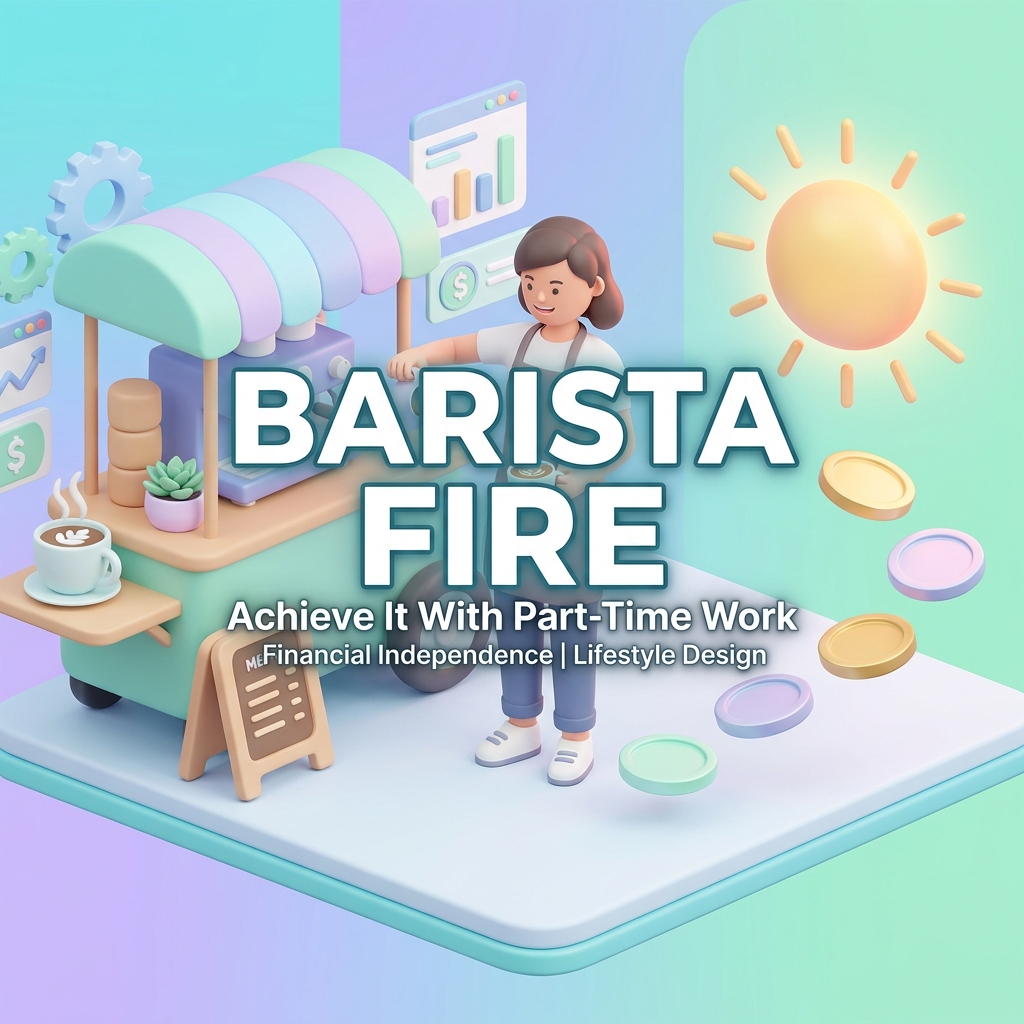
Barista FIRE (named after the idea of quitting a corporate job to work part-time as a Starbucks barista for the health insurance) is a financial state where you have accumulated a substantial investment corpus, but you choose to work a low-stress, part-time, or passion-driven job to cover your daily expenses and access benefits. For more context on different FIRE strategies, check out our Ultimate Guide to FIRE in India.
Unlike Coast FIRE, where you are waiting for your corpus to grow until age 60, in Barista FIRE, you actually intend to slowly draw down your corpus (or live off its dividends) while supplementing it with a small active income.
The Financial Mechanics in India
Let's say your family requires ₹1 Lakh a month to live comfortably. To fully FIRE, you would need a corpus of roughly ₹4 Crores (using a conservative 3% withdrawal rate).
But what if you hit ₹2 Crores and are completely burned out?
At a 3% withdrawal rate, your ₹2 Crore portfolio safely generates ₹50,000 a month. You are halfway there. Instead of grinding for another 7 years in a job you hate to reach ₹4 Crores, you can Barista FIRE today.
You quit your corporate job and take up consulting, freelance writing, teaching, or a low-stress remote job that pays just ₹50,000 a month.
Your active income + your portfolio income = ₹1 Lakh. Your lifestyle is fully funded, but your stress levels drop by 90%.
The Health Insurance Problem in India
In the US, Barista FIRE is highly popular because part-time jobs (like Starbucks) offer corporate healthcare benefits.
In India, part-time or freelance roles almost never provide medical insurance. Therefore, before executing a Barista FIRE strategy in India, you must secure a massive, independent family health insurance policy (Base + Super Top-Up). You can review standard policies regulated by the IRDAI and factor that premium into your mandatory expenses.
Is Barista FIRE Right For You?
Barista FIRE is the ultimate hack for people who want to reclaim their time immediately without waiting to hit an astronomical net worth.
Want to see how a part-time income drastically reduces your target FIRE number? Plug a supplementary income into our FIRE Calculator and watch your required corpus shrink instantly.
FAQs
1. Can Barista FIRE work in India without part-time culture?
Yes. While India doesn't have a Western "part-time barista" culture that offers health insurance, freelance consulting, remote gig work, or teaching can provide the low-stress income needed to bridge the gap.
2. How does Barista FIRE compare to Coast FIRE?
Coast FIRE means you stop investing but still work full-time to cover your expenses while your corpus grows. Barista FIRE means you actively draw down some of your corpus while working a much easier, lower-paying job.
3. What is the biggest risk of Barista FIRE in India?
The biggest risk is medical emergencies, since part-time jobs in India don't provide corporate health cover. A robust private health insurance policy is mandatory.
4. Do I pay tax on Barista FIRE income?
Yes, any consulting or freelance income is taxable. However, because the income is lower, you often fall into lower tax brackets or can use presumptive taxation under Section 44ADA.
5. How does plannF help with Barista FIRE planning?
plannF allows you to model multi-stage retirements. You can input a part-time "Barista" income phase for 5-10 years before transitioning into full retirement, letting you see exactly how much less you need to save today.